>>> Click here for the english version
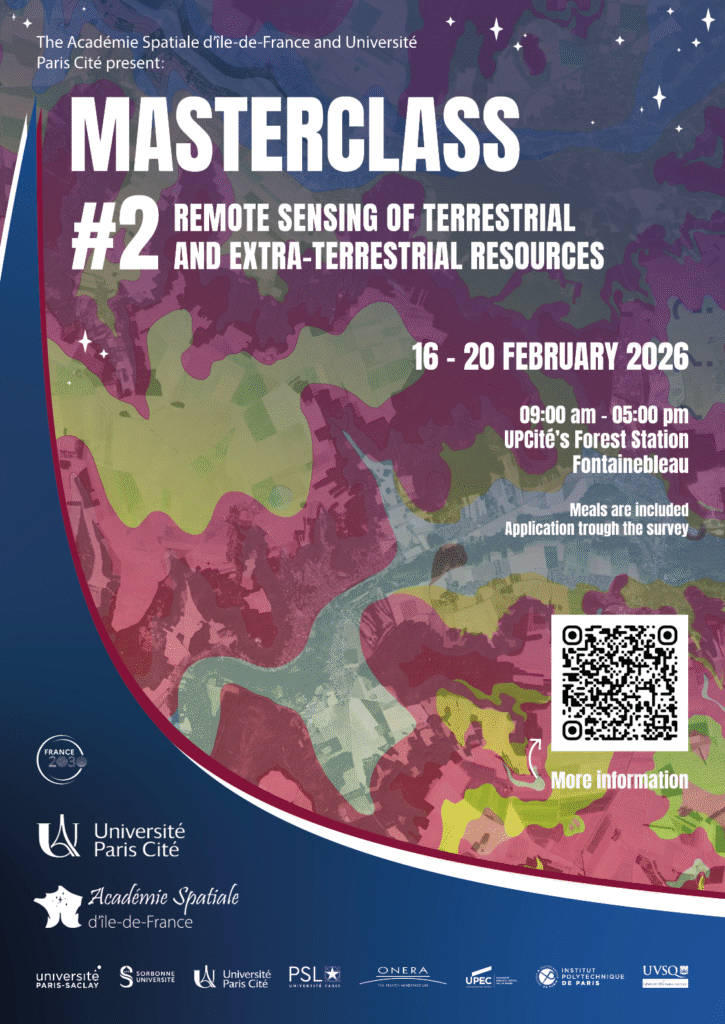
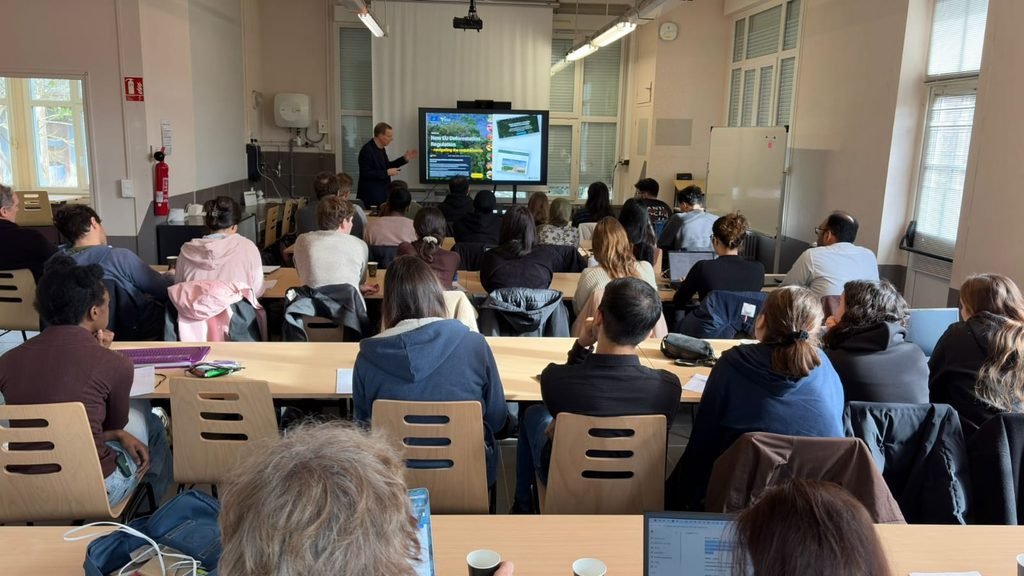
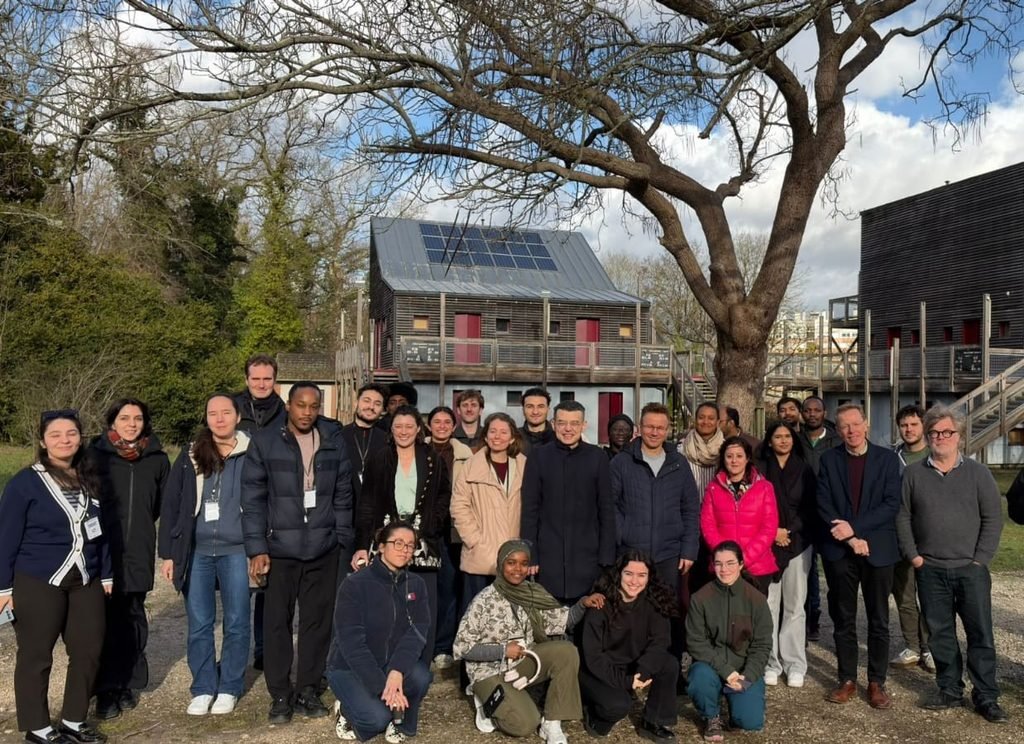
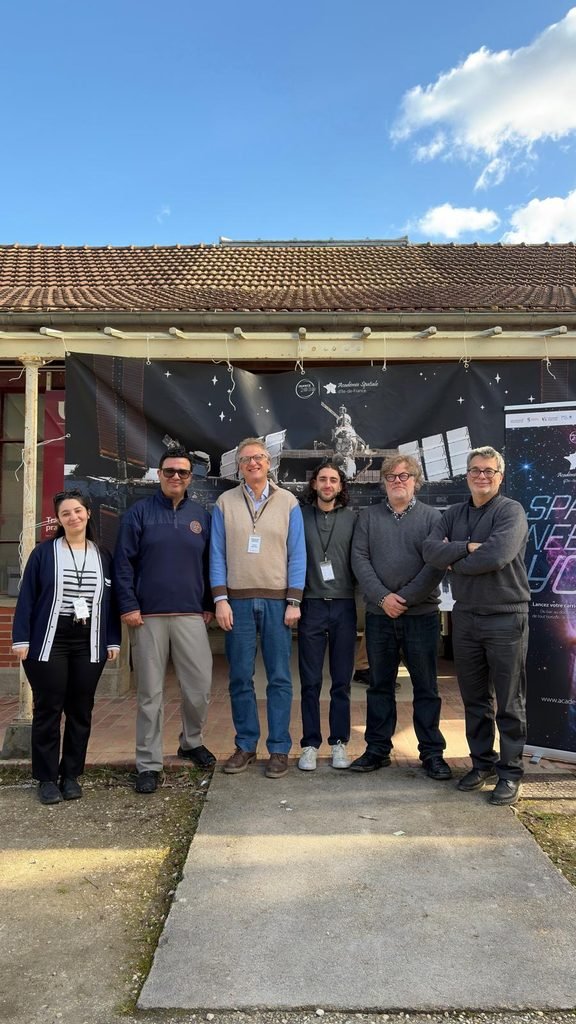
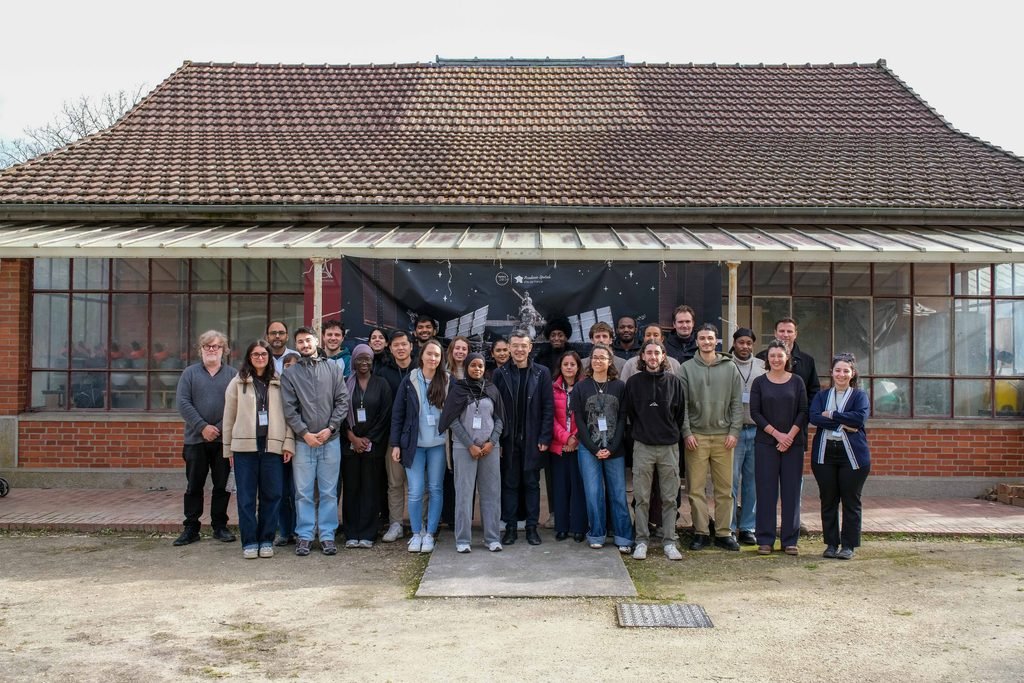
From February 16 to 20, 2026, the Île-de-France Space Academy organized the second edition of its “Remote Sensing of Terrestrial and Extraterrestrial Resources” masterclass at Université Paris Cité’s Fontainebleau Forestry Station. During the five-day residential program, some 40 students participated in more than 40 hours of training, working closely with researchers, faculty members, and professionals from universities, space agencies, and French and international companies.
This second edition reaffirms the Masterclass’s role as an annual intensive training event organized by the Île-de-France Space Academy, bridging the fields of Earth sciences, space exploration, industry, and societal challenges.
Some figures
- 5-day residential program
- Around 40 students
- More than 40 hours of training
- About 20 instructors and experts
- 1 plant tour, including 4 visits to laboratories and workshops at Sodern
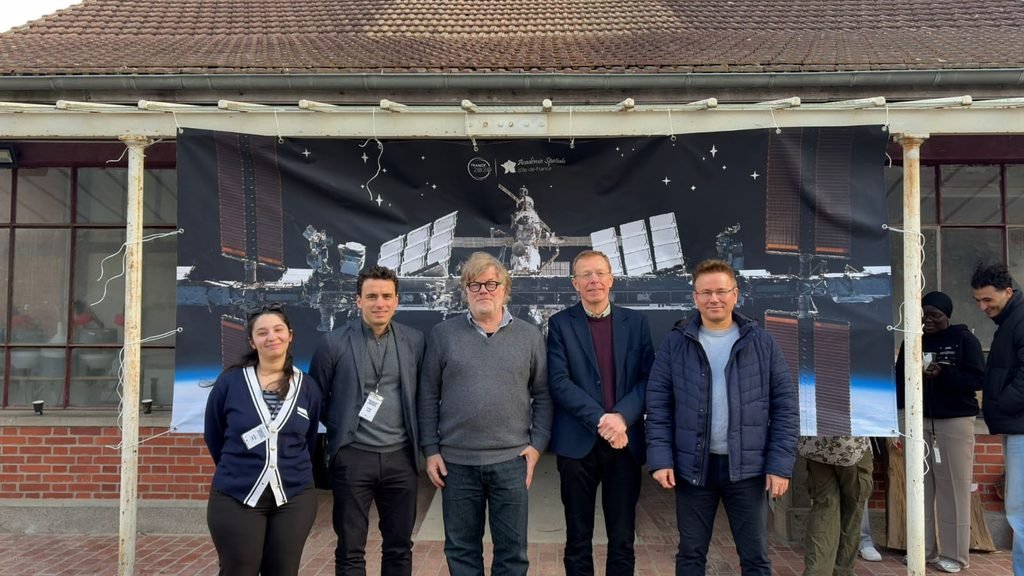
The “Remote Sensing of Terrestrial and Extraterrestrial Resources” Masterclass is organized by Philippe Lognonné (scientific director) and Delphine Urbah (project manager), with the support of Nitaya Singsengsouvanh (administrative and financial manager) and Ramon Margarit (doctoral student), as part of the Académie Spatiale Île-de-France.
The Masterclass is worth 3 ECTS credits at UPCité.
Retrospective
Monday, February 16
Earth Observation & Terrestrial Resources
- Pierre Defourny – UCLouvain
Leveraging Satellite Remote Sensing towards More Sustainable Agriculture Transformation and Food Security - Michel LePage – IRD / CESBIO
Water Management in Agriculture with Earth Observation - Saeid Asadzadeh – GFZ Helmholtz Centre for Geosciences / Universität Potsdam
Advances in Hyperspectral Remote Sensing for Terrestrial Mineral Exploration - Anthony Credoz – TotalEnergies
Earth Observation and AI for Low-Carbon Energy - Essam Heggy – Institut de physique du globe de Paris (IPGP)
Mapping Water in Deserts and Planets - Stéphane Jacquemoud – Institut de physique du globe de Paris (IPGP)
Vegetation Remote Sensing
Tuesday, February 17
From Earth to Space
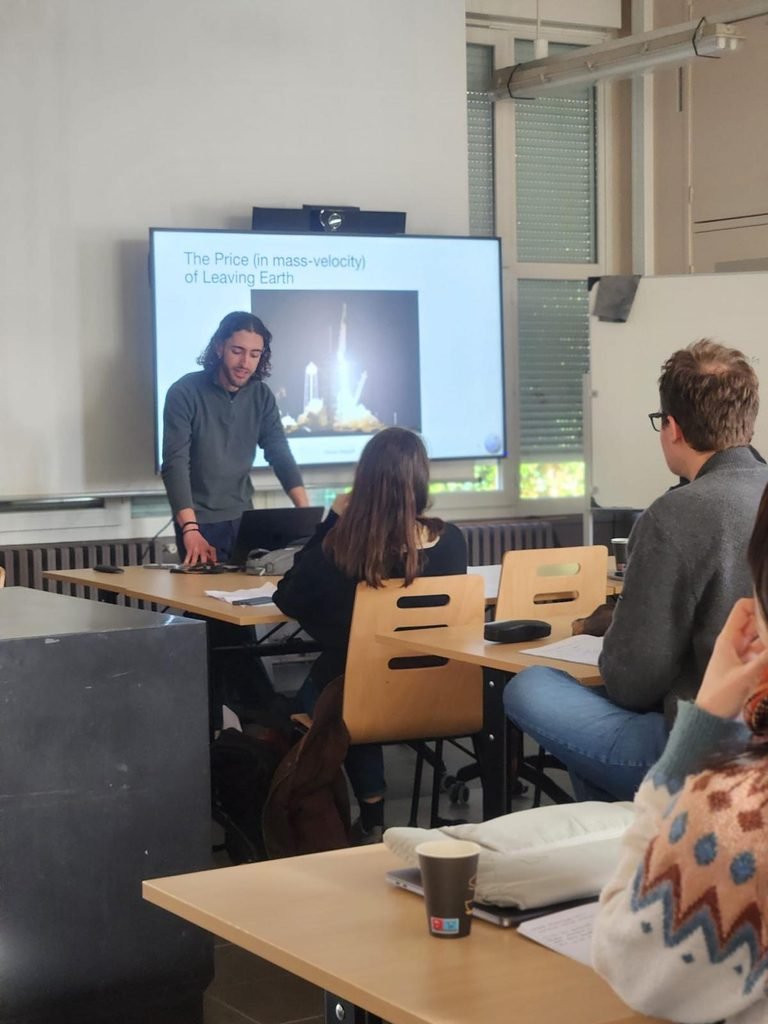
- Ramon Margarit – Institut de physique du globe de Paris (IPGP)
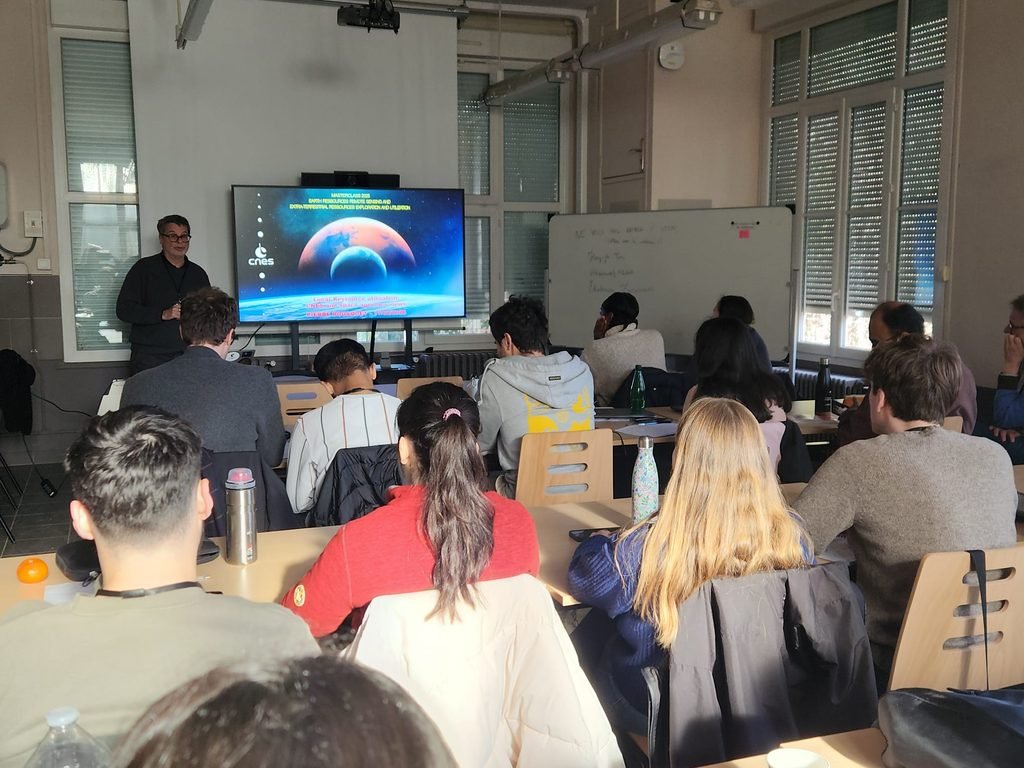
The Price of Leaving Earth: Rocket Equation and Orbital Transfers – Fuel Costs Meet Orbital Efficiency - Pierre Bousquet – CNES
Lunar Resource Utilisation: CNES and Space Agencies’ Views
Wednesday, February 18
Industrial Immersion – Sodern (ArianeGroup)
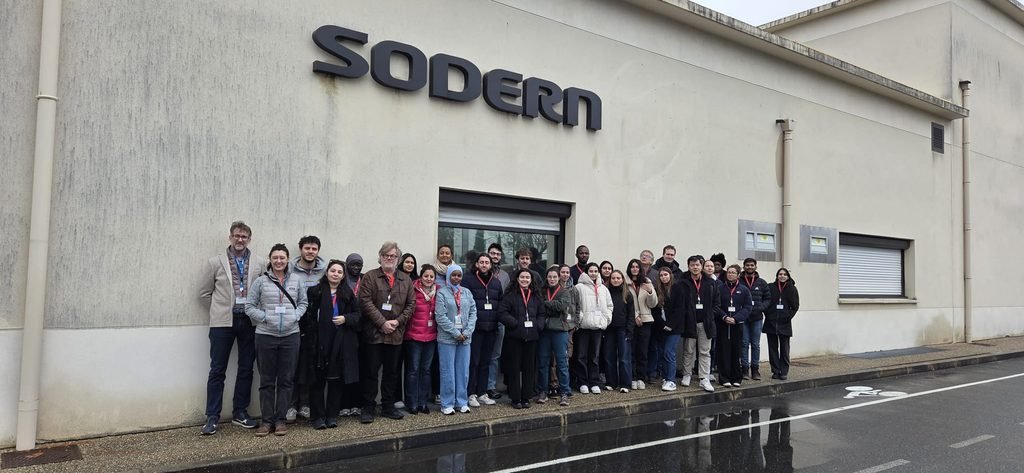
On the agenda for the 2026 edition of the Masterclass is a tour of the Sodern (ArianeGroup) industrial site. Welcomed by Antoine Lecocq, participants attended two technical presentations and four tours of laboratories and workshops, focusing in particular on Earth observation, optical manufacturing, neutron analysis of materials, and the production of star trackers.
This immersive experience allowed participants to apply what they had learned during the week to the practical challenges of designing, manufacturing, and qualifying instruments for space missions.
- Roland Le Goff – Earth Remote Sensing
- Olivier Andry – Optical Manufacturing
- Lenny André – Neutronic Material Analysis
- Rémi Crancée – Manufacturing of the Auriga Star Tracker
Thursday, February 19
Lunar Resources & Infrastructure
- Pooneh Maghoul – Polytechnique Montréal
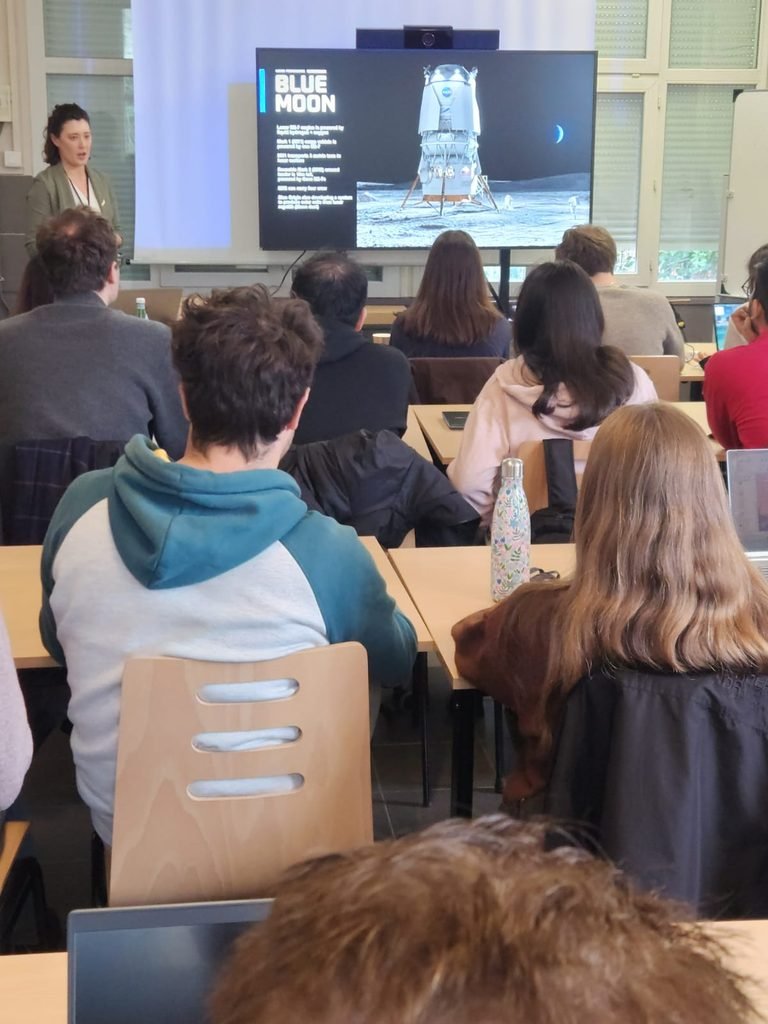
Lunar Resources and Regolith Properties for Lunar Mining and Surface Development - Erica Pitcavage – Blue Origin
Identifying and Utilizing Space Resources for the Benefit of Earth - Cameron Dickinson – University of Toronto
Robotically-Based Regolith Construction on the Moon - George Cann – Foster + Partners
Development of Infrastructure and Habitats for the Moon and Mars
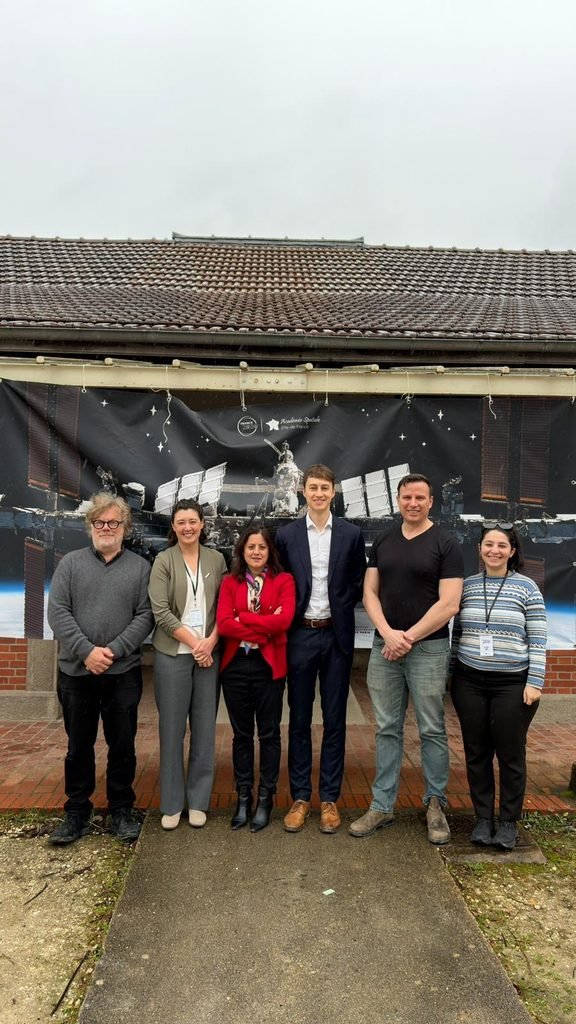
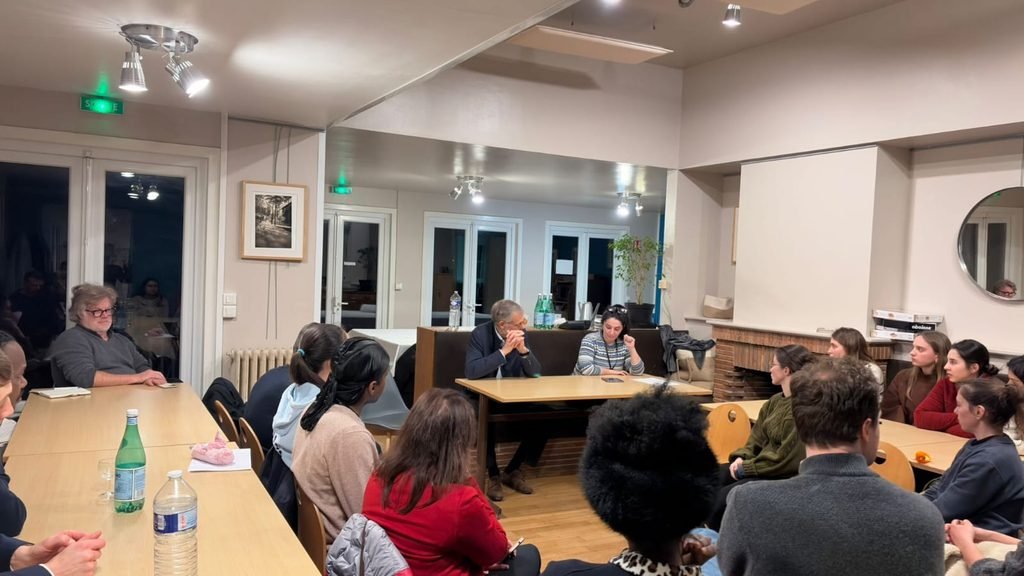
The day dedicated to lunar resources continued into the evening with a meeting featuring Jacques Arnould, an ethics expert at CNES, in the form of an open discussion with the students about the goals of space exploration, scientific responsibility, and the ethical choices involved in the expansion of human activities beyond Earth.
Ethics, Law & Governance of Space Exploration
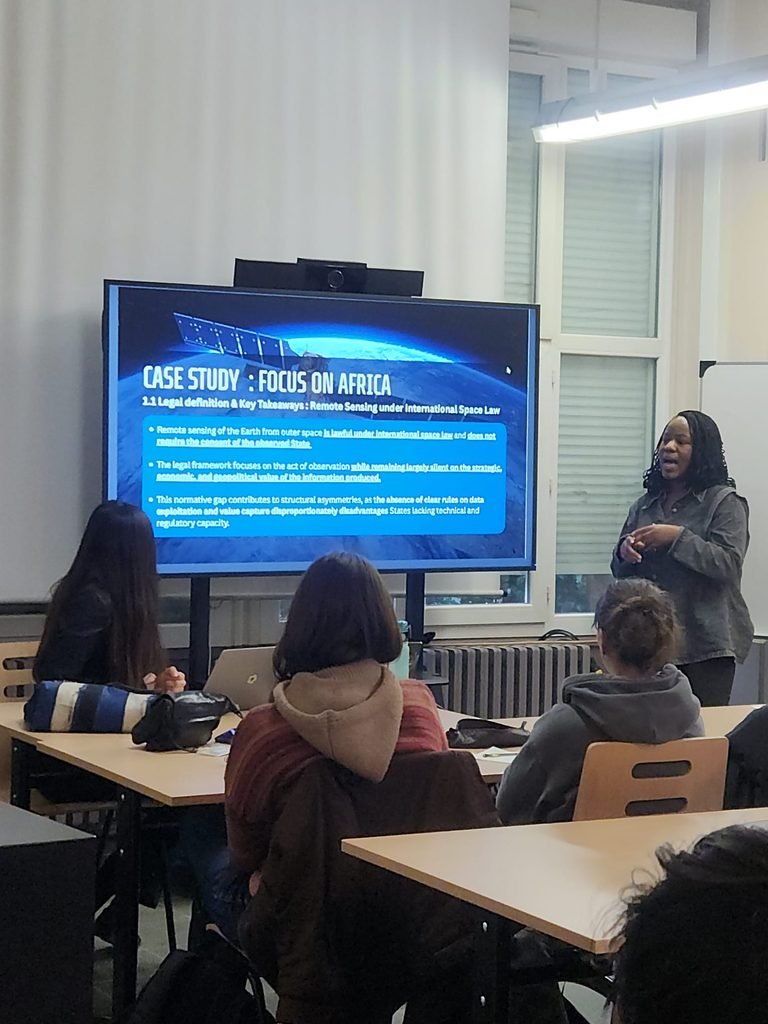
- Grace-Léa Mbadinga & Charline Coudry – IDEST / Université Paris-Saclay
Legal Aspects of Resources: Space Resources and Remote Sensing - Jacques Arnould – CNES
Special Evening Discussion on the Ethics of Space Exploration
Friday, February 20
Economics, Geodesy & Lunar Exploration
- Andreas Hein – University of Luxembourg
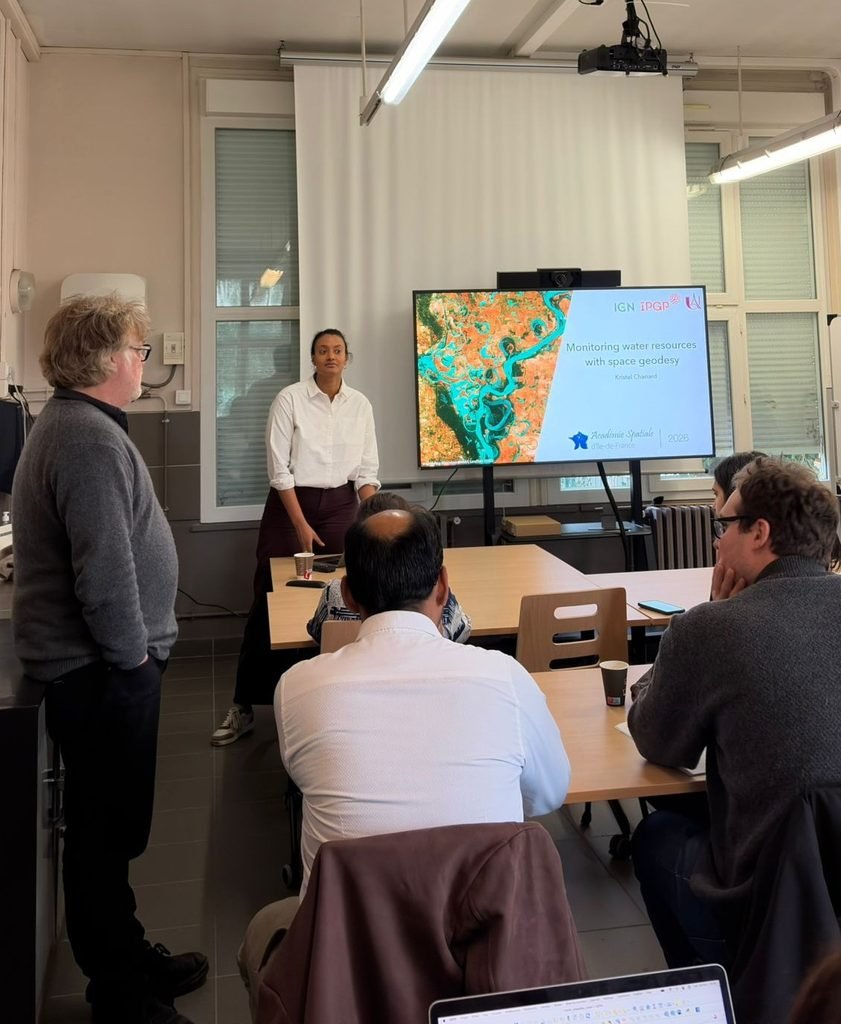
Techno-Economic Analysis of Space Mining - Kristel Chanard – Institut de physique du globe de Paris (IPGP)
Monitoring Water Resources with Space Geodesy - Philippe Lognonné – Institut de physique du globe de Paris (IPGP)
Geophysical Instrumentation for Lunar Resources (Water) Exploration
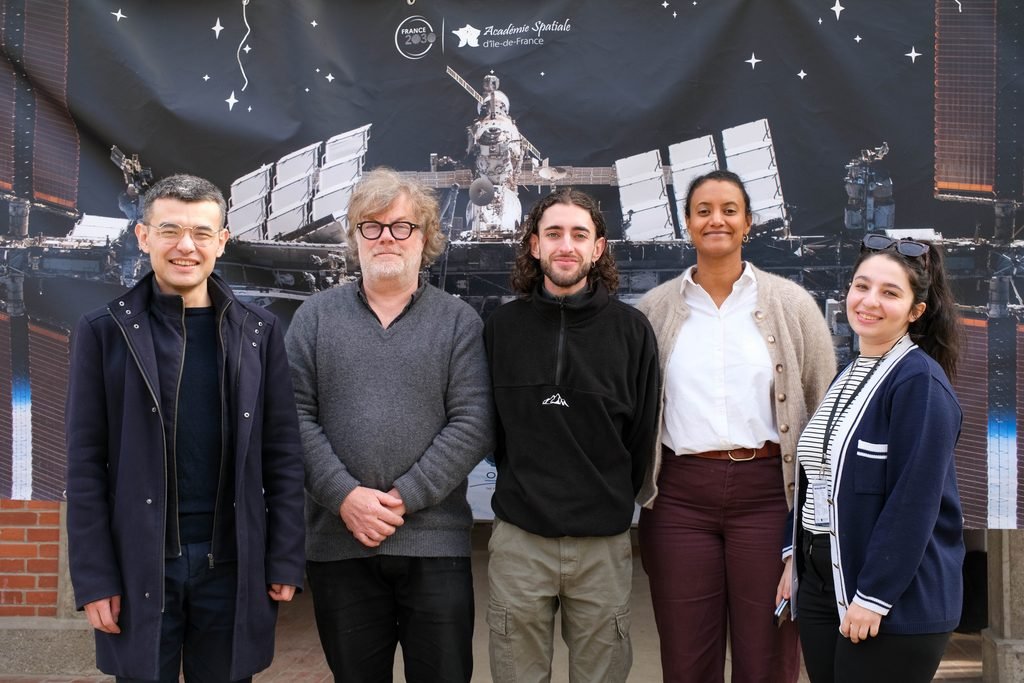
A week to learn and build a community
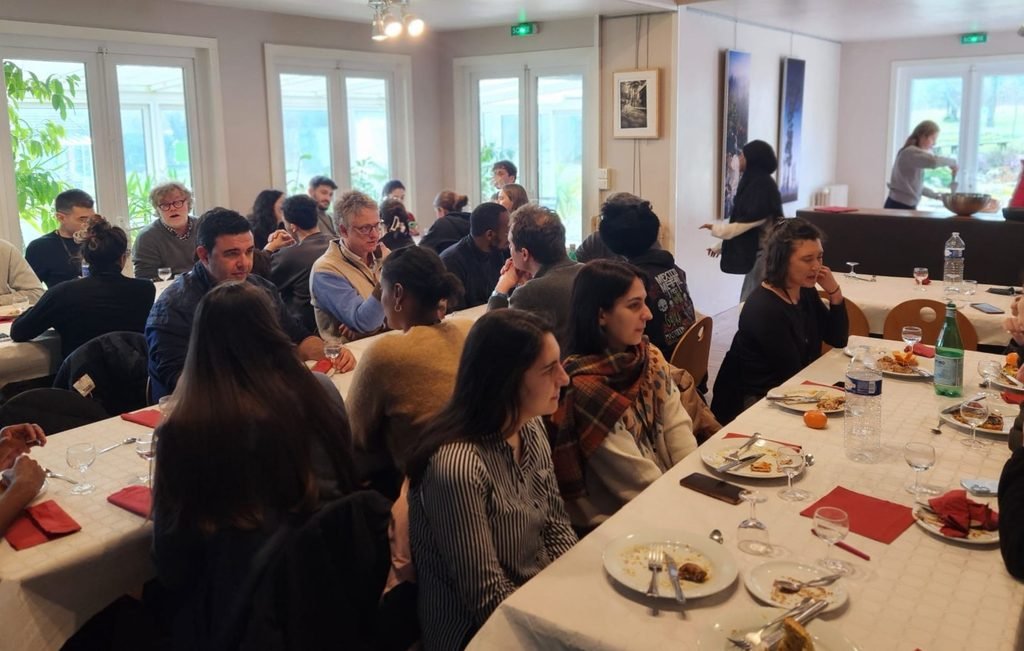
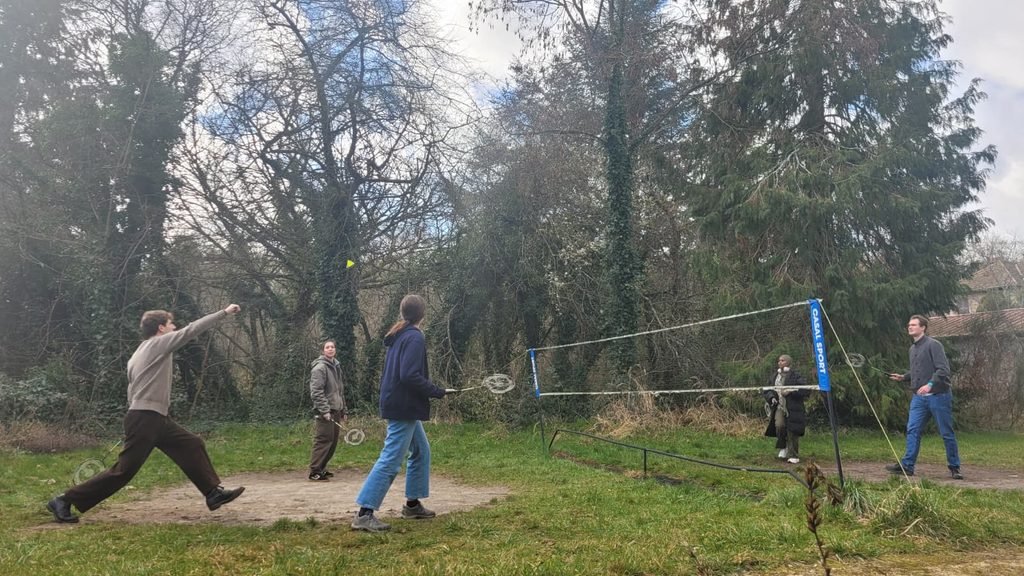
The main change in this second edition is its fully residential format. For five days, students, speakers, and organizers shared the same space for learning and living. Lunches, dinners, and informal gatherings thus extended the scientific discussions beyond the scheduled classes.
This format fulfills a core objective of the Île-de-France Space Academy: not only to offer interdisciplinary courses, but also to create the conditions for lasting connections among students, researchers, institutions, and space industry professionals. The Masterclass thus becomes a space where new scientific and professional collaborations can emerge at the regional, national, and international levels.
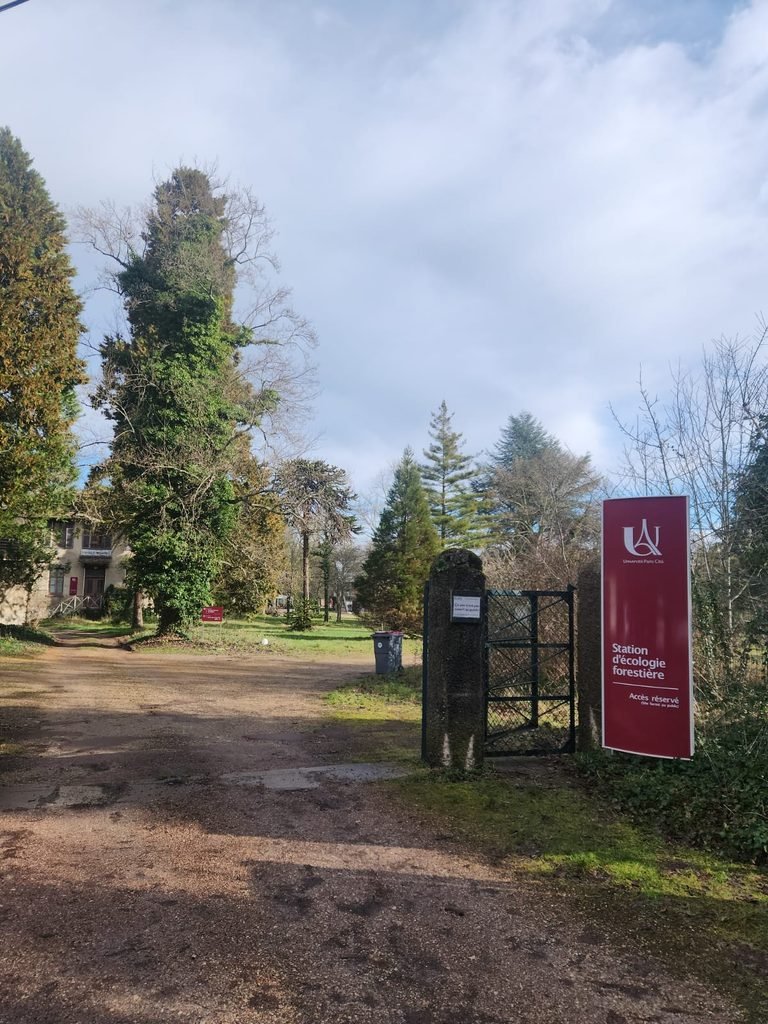
Du 16 au 20 février 2026, l’Académie Spatiale Île-de-France a organisé la deuxième édition de sa Masterclass « Remote Sensing of Terrestrial and Extraterrestrial Resources », à la Station forestière de Fontainebleau d’Université Paris Cité. Pendant cinq jours en résidence, une quarantaine d’étudiantes et étudiants ont suivi plus de 40 heures de formation, au contact de chercheurs, chercheuses, enseignant·es et professionnel·les issu·es d’universités, d’agences spatiales et d’entreprises françaises et internationales.
Cette deuxième édition confirme la vocation de la Masterclass à constituer un rendez-vous annuel de formation intensive de l’Académie Spatiale Île-de-France, à l’interface entre sciences de la Terre, exploration spatiale, industrie et enjeux de société.
Quelques chiffres
- 5 jours en résidence
- Environ 40 étudiants et étudiantes
- Plus de 40 heures de formation
- Une vingtaine d’intervenant·es et expert·es mobilisés
- 1 visite industrielle avec 4 visites de laboratoires et ateliers chez Sodern
La Masterclass « Télédétection des ressources terrestres et extraterrestres » est organisée par Philippe Lognonné (responsable scientifique) et Delphine Urbah (cheffe de projet), avec le soutien de Nitaya Singsengsouvanh (gestionnaire administrative et financière) et Ramon Margarit (mission doctorale), dans le cadre de l’Académie Spatiale Île-de-France.
La Masterclass donne droit à 3 crédits ECTS à l’UPCité.
Rétrospective
Lundi 16 février
Observation de la Terre et ressources terrestres
- Pierre Defourny – UCLouvain
Leveraging Satellite Remote Sensing towards More Sustainable Agriculture Transformation and Food Security - Michel LePage – IRD / CESBIO
Water Management in Agriculture with Earth Observation - Saeid Asadzadeh – GFZ Helmholtz Centre for Geosciences / Universität Potsdam
Advances in Hyperspectral Remote Sensing for Terrestrial Mineral Exploration - Anthony Credoz – TotalEnergies
Earth Observation and AI for Low-Carbon Energy - Essam Heggy – Institut de physique du globe de Paris (IPGP)
Mapping Water in Deserts and Planets - Stéphane Jacquemoud – Institut de physique du globe de Paris (IPGP)
Vegetation Remote Sensing
Mardi 17 février
De la Terre à l’espace
- Ramon Margarit – Institut de physique du globe de Paris (IPGP)
The Price of Leaving Earth: Rocket Equation and Orbital Transfers – Fuel Costs Meet Orbital Efficiency - Pierre Bousquet – CNES
Lunar Resource Utilisation: CNES and Space Agencies’ Views
Mercredi 18 février
Visite industriel – Sodern (ArianeGroup)
Au programme de l’édition 2026 de la Masterclass, une visite du site industriel de Sodern (ArianeGroup). Accueillis par Antoine Lecocq, les participant·es ont bénéficié de deux présentations techniques et de quatre visites de laboratoires et ateliers, consacrées notamment à l’observation de la Terre, à la fabrication optique, à l’analyse neutronique des matériaux et à la production de viseurs d’étoiles.
Cette immersion a permis de confronter les enseignements de la semaine aux contraintes concrètes de conception, de fabrication et de qualification d’instruments destinés aux missions spatiales.
- Roland Le Goff – Earth Remote Sensing
- Olivier Andry – Optical Manufacturing
- Lenny André – Neutronic Material Analysis
- Rémi Crancée – Manufacturing of the Auriga Star Tracker
Jeudi 19 février
Ressources et infrastructures lunaires
- Pooneh Maghoul – Polytechnique Montréal
Lunar Resources and Regolith Properties for Lunar Mining and Surface Development - Erica Pitcavage – Blue Origin
Identifying and Utilizing Space Resources for the Benefit of Earth - Cameron Dickinson – University of Toronto
Robotically-Based Regolith Construction on the Moon - George Cann – Foster + Partners
Development of Infrastructure and Habitats for the Moon and Mars
La journée consacrée aux ressources lunaires s’est prolongée en soirée par une rencontre avec Jacques Arnould, expert éthique au CNES, sous la forme d’un échange ouvert avec les étudiant·es sur les finalités de l’exploration spatiale, la responsabilité scientifique et les choix éthiques qui accompagnent le développement des activités humaines au-delà de la Terre.
Éthique, droit et gouvernance de l’exploration spatiale
- Grace-Léa Mbadinga & Charline Coudry – IDEST / Université Paris-Saclay
Legal Aspects of Resources: Space Resources and Remote Sensing - Jacques Arnould – CNES
Special Evening Discussion on the Ethics of Space Exploration
Vendredi 20 février
Économie, géodésie et exploration lunaire
- Andreas Hein – University of Luxembourg
Techno-Economic Analysis of Space Mining - Kristel Chanard – Institut de physique du globe de Paris (IPGP)
Monitoring Water Resources with Space Geodesy - Philippe Lognonné – Institut de physique du globe de Paris (IPGP)
Geophysical Instrumentation for Lunar Resources (Water) Exploration
Une semaine pour apprendre et créer une communauté
La principale évolution de cette deuxième édition réside dans son format entièrement résidentiel. Étudiant·es, intervenant·es, organisateurs et organisatrices ont partagé pendant cinq jours le même lieu de formation et de vie. Déjeuners, dîners et temps informels ont ainsi prolongé les échanges scientifiques au-delà des enseignements programmés.
Ce format répond à une ambition centrale de l’Académie Spatiale Île-de-France : ne pas seulement proposer des enseignements interdisciplinaires, mais créer les conditions de rencontres durables entre étudiants, chercheurs, institutions et industriels du spatial. La Masterclass devient ainsi un espace où peuvent émerger de nouvelles collaborations scientifiques et professionnelles à l’échelle francilienne, nationale et internationale.